
Creatine and Menopause: What the Research Shows
This post contains affiliate links. If you buy through them, we may earn a commission at no extra cost to you. Read our affiliate disclosure
On this page
- Why Creatine Gets Attention at Menopause
- What the Research Shows
- Muscle and strength: the strongest evidence
- Bone density: don't count on it
- Brain fog and cognition: early and mixed
- Mood: promising, not proven for menopause
- Sleep: one early signal
- Hot flashes and other symptoms
- How to Take Creatine During and After Menopause
- Is creatine safe after menopause?
- Creatines Worth Considering
- FAQ
- Should I take creatine during menopause?
- Does creatine help with menopause weight gain?
- Does creatine help perimenopause brain fog?
- Can creatine prevent osteoporosis?
- Can I take creatine with hormone therapy?
- The Bottom Line
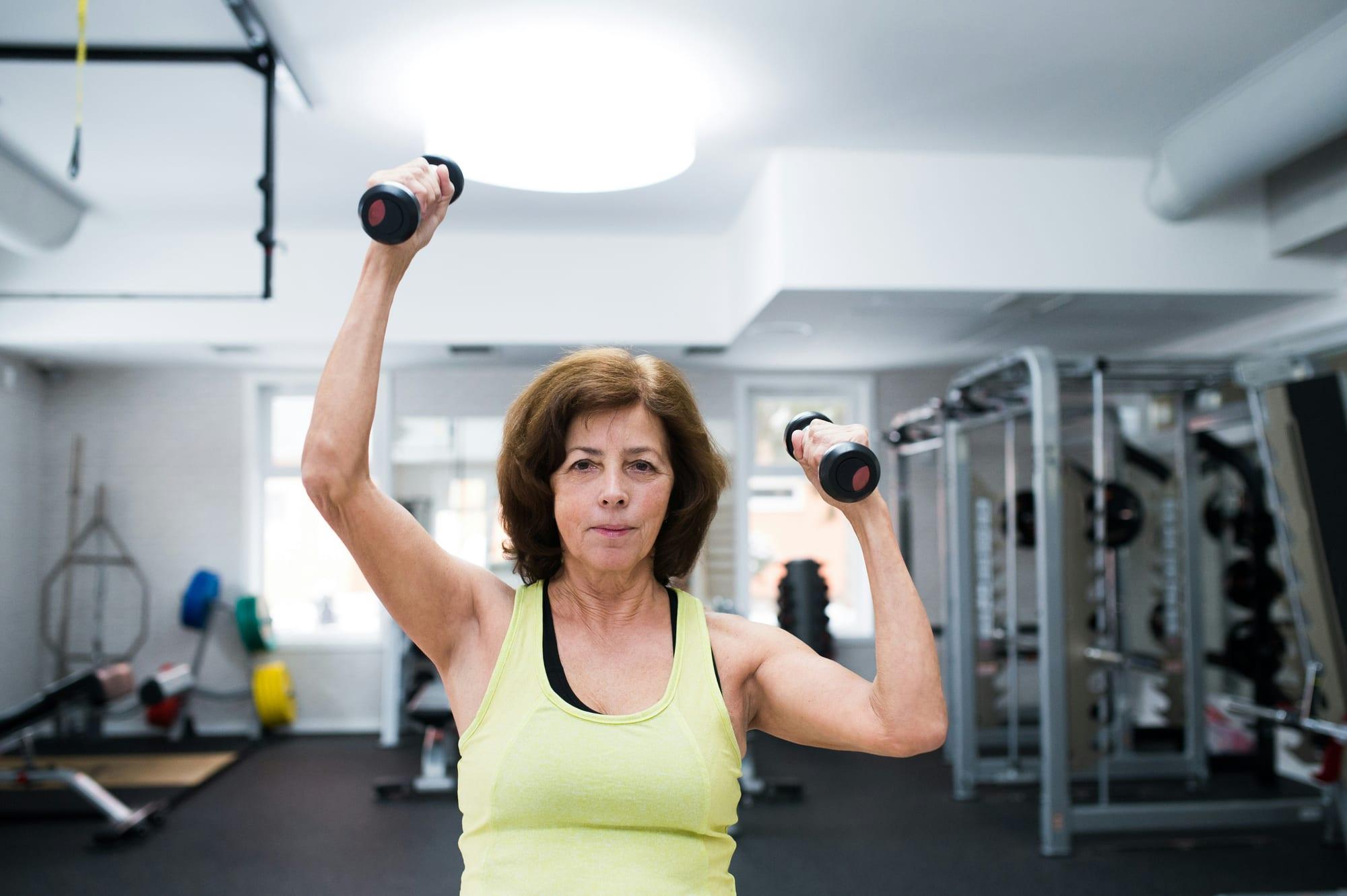
Creatine can help women build and keep muscle and strength after menopause, but mainly when it's combined with strength training. That's where the evidence is strongest. For bone density, the largest trial found no benefit. For brain fog, mood and sleep during perimenopause, the research is promising but very early: only a handful of small studies exist. Creatine isn't a treatment for hot flashes or other menopause symptoms.
If you want to try it, the dose is simple: 3–5 g of creatine monohydrate a day, plus regular strength training.
Why Creatine Gets Attention at Menopause
As estrogen falls during the menopause transition, women lose muscle and bone faster. That raises the risk of weakness, falls and fractures later in life. Estrogen also affects how the body makes and uses creatine, and women already have 70–80% lower natural creatine stores than men.
Creatine is one of the best-studied supplements for strength and muscle, so researchers have asked an obvious question: can it help women hold on to muscle, bone and brain function through menopause? Here's where the evidence stands, area by area.
What the Research Shows
| Area | Evidence | What studies found |
|---|---|---|
| Muscle and strength | Moderate | Small gains in lean mass and leg strength, when combined with strength training |
| Bone density | Weak | No effect on bone density in the largest two-year trial |
| Brain fog and cognition | Early | Small trials, mixed results |
| Mood | Early | Promising signals, no menopause-specific proof |
| Sleep | Very early | One exploratory finding in perimenopause |
| Hot flashes | None | Not shown to help |
Muscle and strength: the strongest evidence
A 2026 meta-analysis pooled seven randomized, placebo-controlled trials in postmenopausal women (average age about 62). Compared with placebo, creatine led to:
- About 0.4 kg (just under 1 lb) more lean mass.
- About 7.5 kg (16 lb) more leg-press strength.
The key detail: the benefits showed up when women took at least 5 g a day and did resistance training. Trials that used 3 g a day or less without training showed no measurable effect. Side effects were mild and similar to placebo, and kidney markers didn't change.
The gains are small but meaningful. A pound of extra lean mass and a stronger leg press can make a real difference to everyday strength, balance and independence as you get older. But creatine is a booster for strength training, not a replacement for it.
Bone density: don't count on it
Early, smaller studies raised hopes that creatine might protect bone. Then came the biggest test so far: a two-year trial of 237 postmenopausal women doing resistance training and walking. Creatine had no effect on bone mineral density at the hip or spine compared with placebo.
There was one interesting secondary finding: creatine helped maintain some measures of bone shape at the hip linked to bone strength. But that's not the same as protecting against fractures, and the 2026 meta-analysis also found no overall effect on bone density.
If bone health is your main concern, strength training, enough calcium, vitamin D and protein, and a conversation with your doctor about bone density screening matter far more than creatine.
Brain fog and cognition: early and mixed
Brain fog, forgetfulness and trouble concentrating are common during perimenopause. Your brain uses creatine for energy too, so this is an active area of research. But as of a 2025 review, there were no published studies directly testing creatine in perimenopausal women. The first few have only just appeared:
- A 2026 trial of 51 perimenopausal women doing six weeks of strength training found that creatine didn't improve scores on cognitive tests compared with placebo. It did show more blood flow and oxygen in the front of the brain during a mental task, which the authors called an exploratory finding. (Baker et al., 2026)
- A small 2026 trial of 36 peri- and postmenopausal women found that 1.5 g a day of creatine hydrochloride, a different form, improved reaction time and raised brain creatine levels compared with placebo over eight weeks. (Korovljev et al., 2026)
In older adults more broadly, a meta-analysis suggested creatine may help memory, but that result rests on only two trials. So creatine for brain fog is worth watching, but it's not proven.
Mood: promising, not proven for menopause
The risk of depression rises during perimenopause. In small trials of women with major depression who were already taking antidepressants, adding creatine helped symptoms improve faster. But those studies weren't in menopausal women, and creatine is not a treatment for depression. If your mood has changed during the menopause transition, talk to your doctor.
Sleep: one early signal
In the 2026 perimenopause trial, women taking creatine had more consistent sleep patterns by week six than the placebo group, measured with a wearable tracker. They also reported fewer days of feeling hot or temperature-sensitive. The researchers described these as exploratory findings, the study was small and short, and one author works for the tracker company. It's an interesting signal, not a reason to take creatine for sleep.
Hot flashes and other symptoms
There's no good evidence that creatine treats hot flashes, night sweats or other vasomotor symptoms. Effective treatments exist, including hormone therapy and non-hormonal medications, so if symptoms are affecting your life, see your doctor.
How to Take Creatine During and After Menopause
The dose is the same as for anyone else:
- Take 3–5 g of creatine monohydrate a day. The trials that found benefits in postmenopausal women generally used at least 5 g a day.
- Pair it with strength training. This is the most important part. The benefits for muscle and strength showed up in women who lifted, not in women who only took creatine.
- Take it every day, including rest days. Timing doesn't matter much; take it whenever you'll remember.
- Skip the loading phase if you prefer. A daily 5 g dose fills your muscles in about 3–4 weeks. Loading (20 g a day for 5–7 days) gets there faster but is more likely to cause a small, temporary bump on the scale.
- Choose plain creatine monohydrate. It's the form used in nearly all the research. Other forms cost more without proven extra benefit.
- Look for third-party testing, like NSF Certified for Sport, so you know the tub contains what the label says.
More on dosing in our creatine for women guide and creatine dosage guide.
Is creatine safe after menopause?
For healthy women, yes. Trials in postmenopausal women lasting up to two years found side effects were mild and similar to placebo, with no changes in kidney function. Check with your doctor first if you have kidney disease, take medications that affect your kidneys, or have other ongoing health conditions. Our guide to whether creatine is safe covers more.
Worried about weight? Creatine can add a pound or two of water to your muscles, mostly if you load. It doesn't add fat. See does creatine make you gain weight?
Creatines Worth Considering
Both of these are plain creatine monohydrate, 5 g per scoop, with nothing else added, and both are NSF Certified for Sport.
Thorne Creatine is unflavored and micronized, so it mixes easily into water or coffee:
Thorne Creatine
Klean Athlete Klean Creatine is unflavored with no other ingredients:
Klean Athlete Klean Creatine
Our Thorne vs Klean Athlete comparison breaks down the differences. For more options, see the best creatine for women.
FAQ
Should I take creatine during menopause?
If you strength train, or are willing to start, creatine is a reasonable, low-risk addition that can help you build and keep muscle and strength. On its own, without training, it's unlikely to do much. It's not a treatment for menopause symptoms.
Does creatine help with menopause weight gain?
Not directly. Creatine can help you build muscle when you strength train, which supports your metabolism over time, but it doesn't burn fat. It may also add a pound or two of water to your muscles at first.
Does creatine help perimenopause brain fog?
It might, but the evidence is very early. The first trial in perimenopausal women didn't find better cognitive test scores, though it showed some changes in brain activity. More research is under way.
Can creatine prevent osteoporosis?
The evidence says no, at least not on its own. The largest trial in postmenopausal women found no effect on bone density. Strength training, calcium, vitamin D and protein, plus regular screening, are the proven ways to protect your bones.
Can I take creatine with hormone therapy?
There's no known interaction between creatine and menopause hormone therapy, but it hasn't been specifically studied. Ask your doctor before combining supplements with any prescription.
The Bottom Line
Creatine can help women build and keep muscle and strength after menopause, but only as a partner to strength training. Take 3–5 g of creatine monohydrate a day and lift regularly. Don't count on it for bone density, and treat the early findings on brain fog, mood and sleep as promising, not proven. For menopause symptoms like hot flashes, talk to your doctor about treatments that work.
Products in this article
- Thorne CreatineCheck price on Amazon →
- Klean Athlete Klean CreatineCheck price on Amazon →
As an Amazon Associate we earn from qualifying purchases.
Not medical advice. This article is for information only. Talk to a qualified healthcare professional before starting any new supplement, especially if you have a health condition or take medication.
Written by
Nathan
Founder of FuelStackr. Nathan breaks down supplement labels, compares products, and tests what he recommends across four training sessions a week with a pro trainer.
Keep reading
 Creatine
 for Women: Benefits, Dosage and Myths
Creatine works for women, and may matter even more than for men, since women store less of it naturally. Here's what the research shows, how much to take, and the truth about bulking, bloating and weight gain.
7 min read
 Creatine
Best Creatine Monohydrate for Women: Top 10 Picks
Training hard with my four weekly sessions has taught me a lot about what fuels my body best, and my trainer has been a big part of that journey. Lately, I’ve been…
11 min read
 Creatine
Thorne vs Klean Athlete Creatine: Two NSF-Certified Picks Compared
Thorne and Klean Athlete both make plain, NSF Certified for Sport creatine monohydrate with 5 g per scoop. The real differences are price per serving, tub size and where you can buy them.
5 min read